The Pinnacle of Luxury: Most Expensive Hotel in Abu Dhabi


Intro
In the heart of the United Arab Emirates, a unique blend of tradition and modernity takes center stage in the hospitality sector. Abu Dhabi, known for its breathtaking landmarks and lavish lifestyle, has become a symbol of opulence. Among its many attractions, one hotel shines brighter than all the rest, holding the title of the most expensive hotel in the region. This article embarks on a journey to explore every facet of this lavish establishment, from its stunning design to the discerning clientele it attracts.
By peeling back the layers of what makes this hotel a pinnacle of luxury, we aim to provide insights not just for luxury travelers, but for investors and developers as well, highlighting the trends shaping the market and the implications for future ventures in high-end accommodations.
Market Insights
Understanding the landscape of luxury hospitality in Abu Dhabi requires a look at current trends and price analysis, to paint a complete picture of what makes this hotel stand out.
Current Trends
The hospitality sector in the UAE is rapidly evolving. There's an increasing demand for customized experiences, with travelers seeking unique offerings that go beyond the ordinary. High-net-worth individuals desire not just a place to stay but an immersive experience that might include private dining, exclusive art tours, and personalized wellness programs. Moreover, sustainability is gaining traction, with hotels incorporating eco-friendly practices to appeal to environmentally conscious travelers.
This trend has resulted in hotels in Abu Dhabi enhancing their services and amenities, thus creating a competitive environment that forces establishments to consistently innovate. The most expensive hotel doesn't just rest on its laurels; instead, it is at the forefront of offering avant-garde services that cater meticulously to its elite clientele.
Price Analysis
When delving into the details of this hotel’s pricing model, it's evident that the costs reflect not just the accommodations but a multisensory experience. With average nightly rates reaching staggering figures, it's essential to understand what contributes to such high tariffs.
Key factors include:
- Location: Situated strategically near iconic landmarks, guests enjoy unparalleled convenience.
- Architecture and Design: The aesthetics are not merely visually pleasing but also serve functional and emotional purposes, ensuring guests feel a sense of grandeur.
- Service Excellence: Staff training is of the highest caliber, with an emphasis on anticipatory service that readies them for every possible guest need.
- Exclusive Amenities: From private pools to gourmet dining experiences crafted by Michelin-star chefs, each element serves to elevate the guest experience to new heights.
"The price one pays for luxury is not just monetary but also about the experiences and memories crafted within those walls."
Each of these elements plays into the high cost per night, yet for the clientele it attracts, the investment is seen as worthwhile, reinforcing the hotel's status within the luxury market.
Investment Strategies
For those looking to dip their toes into the luxury hospitality sector, understanding investment strategies is crucial. This not only helps in assessing the value of such properties but also in evaluating potential returns.
Buying vs. Renting
Investors face a choice: to buy or to rent in this elite segment. Buying a property can provide a long-term investment with potential capital appreciation. However, it also requires substantial upfront capital and ongoing maintenance costs. Rental agreements offer a more flexible approach, allowing investors to take advantage of market fluctuations without the burden of ownership.
Financing Options
With the price tags on such properties, understanding financing options becomes paramount. Investors can explore traditional mortgages, private equity funding, and joint ventures, among others. Collectively leveraging these methods can offer a diversified approach to capital accumulation, all aimed at targeting high returns in the growing market of luxury hospitality.
Further insights on investment mechanisms can be sought from resources such as the UAE Department of Economic Development (https://ded.abudhabi.ae) that offers guidance on local real estate regulations and best practices.
In summary, this exploration of the most expensive hotel in Abu Dhabi not only showcases luxury at its zenith but also serves as a lens through which we can better understand the evolving dynamics of the luxury hospitality market, paving the way for future opportunities.
Intro to Luxury Hotels in Abu Dhabi
In the shimmering landscape of Abu Dhabi, luxury hotels have become a hallmark of opulence and refinement. This article delves into an understanding of this extravagant sector, emphasizing its significance not just for travelers, but also for investors and developers eager to tap into a flourishing market. Luxury accommodation here is not merely about plush pillows and gourmet dining; it represents a lifestyle choice, tailored to meet the discerning tastes of an elite clientele.
Understanding the Luxury Market
The luxury market in Abu Dhabi is a compelling tapestry woven from various cultural and economic threads. Understanding this market involves recognizing the needs and desires of a clientele that often expects the extraordinary. High-net-worth individuals and affluent families from around the globe form the backbone of this sector. They are drawn not only by lavish accommodations but also by personalized services that cater to their every whim.
For investors, this presents a wealth of opportunities. The demand for sophisticated amenities and experiences is ever-growing, with travelers increasingly seeking hotels that offer a unique blend of tradition and modernity.
"In Abu Dhabi, luxury isn't just experienced; it’s expected."
Abu Dhabi: A Hub for High-End Tourism
Abu Dhabi’s rise as a luxury tourism hotspot is not coincidental. The emirate has invested heavily in developing its tourism infrastructure, establishing attractions that compete on an international scale. From the iconic Sheikh Zayed Grand Mosque to the thrilling Ferrari World, the city offers a mosaic of experiences that appeal to affluent visitors.
The strategic location of many luxury hotels in proximity to these attractions makes them even more appealing. Besides, the continuous push toward cultural and economic diversification drives tourist interest further. The anticipation of the future, influenced by events such as the Abu Dhabi Culture Summit or the Formula 1 Grand Prix, positions the city as a prime destination for high-end travelers.
Overview of the Most Expensive Hotel
In the heart of Abu Dhabi, the landscape of luxury accommodation is marked by gleaming structures and extravagant offerings. This section provides an overview of the most expensive hotel in this ever-evolving city. Understanding the significance of such opulence is critical for potential investors and discerning travelers who are keen on exploring unrivaled experiences that go beyond mere expenditures. The essence of luxurious lodging is not just found in the price tag but in the comprehensive package of unique amenities, ability to create unforgettable experiences, and the prestige that it brings to its guests.
Hotel Name and Basic Information
The most expensive hotel in Abu Dhabi is the Emirates Palace. With its stunning architecture and breathtaking interiors, it is not just a place to stay but an experience in itself. Having opened its doors in 2005, the hotel has since set the gold standard in luxury hospitality within the region. Here are some essential details:
- Location: Nestled along the lush coastline of the Arabian Gulf, the Emirates Palace enjoys a vantage position that complements its lavish offerings.
- Room Availability: The hotel boasts 394 rooms, of which 92 are luxurious suites. Each accommodation is meticulously designed with the finest materials to ensure a sublime stay.
- Design: The hotel’s design blends both Arabian and modern architecture, using locally sourced materials.
- Awards: Emirates Palace has received numerous accolades for its service and facilities, further cementing its place in the luxury sector.
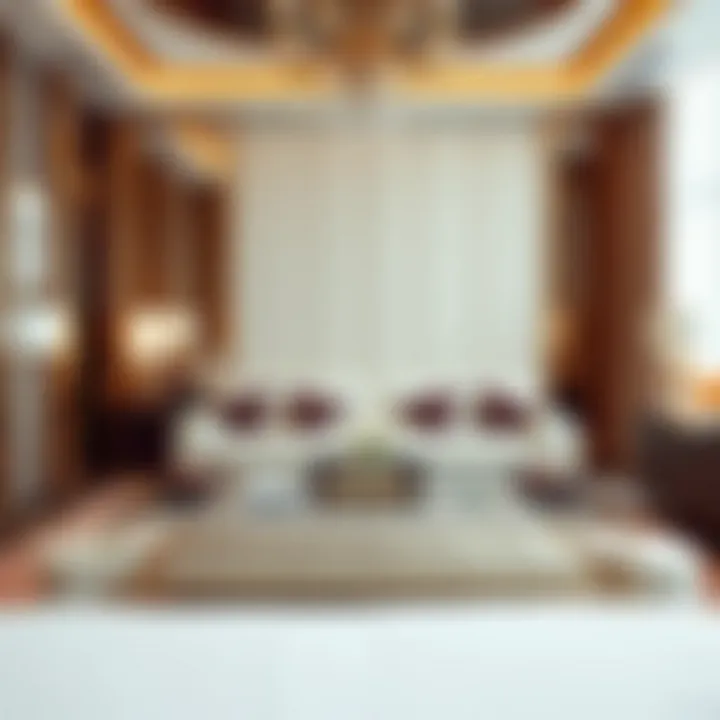
The harmonious blend of modern facilities with traditional Arabic hospitality makes the Emirates Palace a cut above the rest. Visitors can expect a host of exclusive perks, reflecting what true luxury embodies in today’s market.
Location and Accessibility
Strategically situated in the UAE, the Emirates Palace is ideally located about 30 minutes from the Abu Dhabi International Airport. This accessibility makes it a popular choice among international guests, including business executives and affluent tourists. The hotel is not far from key attractions such as the Louvre Abu Dhabi and the Sheikh Zayed Grand Mosque, making it easier for visitors to explore while indulging in ultimate luxury.
Transportation options include:
- Private car services for seamless transfers.
- Easy access to local taxis and ride-sharing services.
- Proximity to main roads and public transport, providing further convenience for guests.
Moreover, the hotel's geographical prominence supports its role in the regional tourism landscape. Visitors who wish to explore Abu Dhabi’s rich culture and modern attractions find the Emirates Palace as a convenient base with effortless accessibility.
"Luxury must be comfortable, otherwise it is not luxury." - Coco Chanel
The Emirate’s commitment to hospitality excellence is reflected in the overwhelming choices available for locals and travelers alike. Overall, the Emirates Palace serves as a benchmark that encapsulates luxury, convenience, and cultural richness, making it a cornerstone for high-end tourism in Abu Dhabi.
Architectural Grandeur and Design Elements
When diving into the opulent realm of luxury hotels, examining architectural grandeur and design elements stands paramount. These aspects not only shape the visual appeal but also define the uniqueness and prestige of the property. For the most expensive hotel in Abu Dhabi, its architectural marvel acts as a lighthouse, guiding discerning travelers toward a world of comfort, serenity, and extravagance.
Architectural Style and Inspiration
The architectural style of this hotel cannot be understated. It melds modern sophistication with rich cultural heritage, reflecting the essence of Abu Dhabi’s identity. Drawing inspiration from Islamic architecture, the hotel features intricate geometric patterns, delicate arches, and towering domes that resonate with the local environment. The use of local materials evokes a sense of place while ensuring that the design harmonizes seamlessly with its surroundings.
Aiding in the hotel's prestige, the iconic façade serves as a critical design element that embodies both tradition and innovation. For instance, glass and steel structures interlace elegantly with traditional marbles, promoting an interplay of light that transforms the atmosphere within. This interplay helps foster a sense of warmth and tranquility, enhancing the overall guest experience. Each corner unveils thoughtful design choices, such as the use of indoor water features, which not only add pleasing aesthetics but also contribute to the soothing ambiance throughout the hotel.
"> Architecture captures the essence of luxury, enveloping guests in a narrative that speaks of opulence and heritage."
Moreover, the spatial flow within the hotel is another aspect worth considering. The layout is designed to encourage movement, with wide corridors leading guests through various luxurious spaces, while intimate nooks are created for privacy and relaxation. The grand entrance halls, adorned with shimmering chandeliers and gold accents, set the stage for a lavish experience that unfolds further down the path.
Sustainable Design Practices
In an era where sustainability is critical, this hotel doesn’t shy away from responsibility. Implementing sustainable design practices is a hallmark that adds layers to its prestige. Grounded in the philosophy of blending luxury with environmental mindfulness, the hotel incorporates advanced systems such as rainwater harvesting and solar energy solutions. These elements reduce the ecological footprint while maintaining elite standards of luxury and comfort.
The sustainable practices extend into the interior design too. Utilizing locally sourced materials not only supports the community but also minimizes transportation emissions. Additionally, energy-efficient lighting and HVAC systems are integrated throughout the property, creating an atmosphere enhancing efficiency without compromising the experience of luxury.
Furthermore, the use of durable furnishings paired with conscientious waste management systems showcases a commitment toward creating a greener hospitality landscape. Such initiatives not only reflect a forward-thinking outlook but also appeal to eco-conscious travelers who seek experiences that resonate with their values. As the market continues to evolve, aligning luxury with sustainability is no longer an option—it is a necessity and an expectation among high-end clientele.
Overall, the architectural grandeur and design elements of the most expensive hotel in Abu Dhabi stand as a testament to the careful balance between luxury, cultural heritage, and environmental responsibility. With each meticulously crafted detail, it tells a story that enchants and captivates, setting a gold standard for future developments in hospitality.
Exclusive Amenities and Services
In the luxurious world of hospitality, amenities and services stand as the beating heart of any premium experience. For the most expensive hotel in Abu Dhabi, these offerings go far beyond mere convenience; they define the guest’s experience and reflect the hotel’s commitment to opulence. Exclusive amenities can transform an ordinary stay into an extraordinary journey, encapsulating both relaxation and thrill.
When contemplating an investment or a visit to this prime destination, understanding these exclusive offerings is crucial not only for potential guests but also for stakeholders in the tourism and hospitality markets. The benefits derived from high-end amenities often translate to an enhanced reputation for hotels, resulting in a cycle where satisfied guests return and refer others.
Luxury Accommodations
Types of Suites
The types of suites within the most expensive hotel are designed with precision and flair. This hotel doesn’t just offer rooms; it provides unique havens of comfort tailored for individual guests’ desires. For instance, the penthouse suites are adorned with lavish decor, sweeping views of the cityscape, and personalized butler services. Such accommodations elevate the stay, making them highly coveted options.
A significant characteristic of these suites is their customization. Guests often have the opportunity to select decor and services that specifically cater to their preferences. The result? A stay that feels uniquely theirs. Not to mention, the private terraces and jacuzzis in some suites provide unparalleled privacy and relaxation, appealing to those seeking seclusion away from the bustling city.
Prospective guests rave about the experience of lounging on a spacious balcony, sipping fine champagne as the sun sets over the horizon. However, it’s noteworthy that this exclusivity comes with a price that can deter more budget-conscious travelers. Balancing exclusivity with availability is a challenge but one that the hotel manages with finesse.
Interior Design Features
Interior design in luxury hotels often tells a story—and this hotel is no different. With design inspirations drawn from various cultures, every corner is a testament to artful sophistication. The interiors boast a balance of traditional Middle Eastern motifs with modern chic—a blend that not only enhances the aesthetic but serves to immerse guests in the local culture.
Key characteristics include handcrafted furnishings, intricate tile work, and ambient lighting that completes the luxe atmosphere. The meticulous attention to detail resonates with guests searching for more than just superficial luxury. One unique feature is the use of local artisans in crafting spaces that feel less like a hotel and more like a personalized retreat.
While these design elements are celebrated, they might come at the cost of accessibility—some guests may find certain features daunting. However, the overall impression remains that of an artistic masterpiece, adding to the hotel’s overall allure.
Dining Experiences
Gourmet Restaurants
Dining within the hotel is not just a meal; it is an experience that draws food enthusiasts from around the world. The gourmet restaurants offer culinary voyages that tantalize the taste buds and expand one’s gastronomic horizons. Luxury dining here isn’t limited to familiar cuisines; it introduces guests to bold flavors influenced by both western and eastern cultures.
The key characteristic is the exceptional level of service paired with inventive menus curated by renowned chefs. Each dining venue within the hotel has its hallmark, whether it’s an award-winning wine selection or a signature dish that guests can’t stop raving about.
While guests often highlight the exclusivity of private dining options that fit their every wish, others appreciate the bustling atmosphere of communal dining that promotes conversations between like-minded travelers. The challenge, however, is aligning wait times and reservations, as the popularity of these dining experiences means they can easily become overbooked.
Culinary Concepts
The culinary concepts embraced within the hotel reflect an innovative spirit aimed at enhancing the overall dining experience. From fusion cuisine to organic local produce, every dish serves a richer narrative about sustainability and creativity in food preparation. It’s about marrying taste with ethics.
Notable to these concepts is also the seasonal aspect, where guests can indulge in limited-time offerings based on what's fresh. This emphasis on seasonality speaks volumes about the hotel’s commitment to quality over quantity. However, guests might face unexpected changes in menu offerings during their stay.
In summary, the exclusive amenities and services at the most expensive hotel in Abu Dhabi serve as both an invitation and a promise—a warning not just of what guests might expect, but of what they have yet to discover; an intricate tapestry of luxury threads that bind together relaxation, exploration, culinary delight, and cultural richness.
Unique Experiences Offered
In the realm of luxury hospitality, the unique experiences offered by a hotel often transcend traditional accommodations. This aspect is particularly crucial in Abu Dhabi, where competition is fierce among high-end establishments. The most expensive hotel in the city strives to stand out by offering an array of experiences that are not only memorable but also bespoke, catering to the refined tastes of its clientele.
Wellness and Spa Facilities
Wellness and relaxation are no longer just amenities; they are essential components of the luxury experience. The spa at this opulent hotel offers a serene escape from the bustling city life outside its doors. With treatments designed to rejuvenate both body and mind, guests can indulge in therapies that utilize local elements, such as dates and Arabian oils.
Some standout features include:
- Personalized Treatments: Each guest receives customized care based on their personal needs and wellness goals.
- Holistic Therapies: The focus is on holistic approaches that incorporate traditional practices, such as ancient massage techniques and aromatherapy.
- Exclusive Private Suites: Guests can unwind in luxuriously appointed private treatment suites, enhancing their sense of privacy and peace.
These wellness offerings not only promote relaxation but also signify the hotel’s commitment to nurturing its guests’ overall well-being, making each stay a revitalizing escape.
Adventure and Leisure Activities
For those with a thirst for adventure, the hotel does not disappoint. The unique experiences extend beyond the wellness and relaxation domains. Adventure and leisure activities are carefully curated to provide thrill and excitement, designed to leave guests with lasting memories.
Consider the following:
- Desert Safari Excursions: Guests can embark on thrilling desert safaris that include dune bashing, camel rides, and traditional Bedouin dinners under the stars.
- Yacht Charters: Options for private yacht charters allow visitors to explore the stunning coastline of Abu Dhabi, complete with gourmet dining.
- Cultural Experiences: Visitors have access to curated cultural tours that explore the rich heritage of the UAE, including VIP entries to museums and landmarks like the Sheikh Zayed Grand Mosque.
These experiences ensure that guests can engage with the local culture and environment in a way that aligns with the hotel’s high-end offerings.
The array of unique experiences offered emphasizes the hotel’s dedication to not just offering luxury accommodations, but creating a holistic experience that caters to every aspect of a guest’s desires.
Each experience reflects the essence of Abu Dhabi, enhancing the overall appeal of the hotel and affirming its status as a pinnacle of luxury, attracting discerning travelers looking for the extraordinary.
Target Clientele and Demographics
Understanding the target clientele and demographics of the most expensive hotel in Abu Dhabi is pivotal to grasping its essence. This part of the hospitality landscape not only shapes the hotel's identity but also influences its offerings and services. Knowing who steps through the doors can dictate everything from architectural choices to the culinary experiences provided.
Profile of Typical Guests
Guests at the most luxurious hotel in Abu Dhabi often belong to a distinct socio-economic group. They are individuals who appreciate opulence and are willing to pay for exclusive experiences. This clientele often includes:
- Business Leaders: Wealthy entrepreneurs and corporate executives from around the globe seek refined settings for both relaxation and meetings. The hotel serves as an ideal backdrop for high-stakes negotiations, outfitted with the latest technology and services to meet demanding standards.
- Celebrities and Influencers: Known for their lavish lifestyles, this group looks for hotels that offer privacy and ambiance. They seek locations that not only cater to their needs but also allow them to share their experiences with followers, thus enhancing the hotel’s prestige.
- Affluent Tourists: Travelers hailing from all corners of the world, particularly those with high disposable incomes, flock to this luxurious accommodation. Their motivations vary from cultural exploration to shoping sprees or simply indulging in relaxation.
To ensure that these guests feel valued, the hotel must cater to their unique needs through personalized services like exclusive check-ins, concierge assistance, and bespoke experiences.
Global Influences on Clientele
The clientele of this high-end hotel is shaped not just by local factors but also by international trends and influences. Key aspects include:
- Cultural Dynamics: As globalization persists, cultural influences from different regions converge on luxury markets. High-net-worth individuals from emerging economies, especially in Asia, are displaying an increasing appetite for luxurious experiences, significantly contributing to hotel demographics.
- Social Media Influence: In today's digital age, social media has a considerable impact on client decisions. The visibility of exclusive experiences through various platforms plays a crucial role in attracting guests who seek the latest trends in luxury travel.
- Economic Factors: Changes in global economies can influence travel patterns. For instance, a booming economy in a country may lead to an increase in luxury tourism, while economic downturns can have the opposite effect.
"The rising wealthy class in nations such as India and China is driving an unprecedented demand for opulence and exclusivity in hospitality."
In essence, the makeup of clientele is ever-evolving, as both global and local factors come into play. This demographic insight is invaluable for stakeholders aiming to create tailored experiences that meet and exceed the expectations of those seeking the pinnacle of luxury. Engaging with guests on a personal level can prove to be the golden ticket in the competitive world of high-end hospitality.
Economic Implications for the Local Market
When discussing the most expensive hotel in Abu Dhabi, it is impossible to overlook the economic implications that arise in the local market. The presence of such a high-end establishment has a ripple effect throughout the economy, and understanding these implications sheds light on the overall economic environment in Abu Dhabi.
Impact on Tourism Revenue
Luxury hotels are a huge draw for affluent tourists. The most expensive hotel in Abu Dhabi attracts not just wealthy travelers, but also business magnates and influencers who seek to experience opulence. This influx generates significant revenue for various sectors.
- Hospitality Sector Growth: More guests equates to higher occupancy rates across hotels and resorts in the vicinity. From five-star properties to boutique hotels, everyone stands to benefit financially.
- Local Businesses Flourish: These travelers often seek unique experiences. This creates a demand for local restaurants, upscale shopping outlets, and cultural attractions, thus boosting local businesses.
- Increased Employment Opportunities: The demand for high-quality services leads to hiring staff. This affects not only the hotel but also local suppliers, tour operators, and service providers.
- Additional Tax Revenue: With increased tourism, local governments see a rise in tax revenues. The funds generated can then be funneled back into public services or tourism development initiatives.
Therefore, this high-end hotel does not just contribute to its specific industry; it revs up the entire economy.


Influence on Real Estate Market
The presence of a high-profile luxury hotel significantly affects the real estate market in Abu Dhabi. As demand soars for premium accommodation and lifestyle offerings, several consequential aspects emerge:
- Real Estate Value Increase: Areas surrounding the hotel often see a rise in property values. Investors take note, leading to heightened interest in both residential and commercial real estate.
- Development of Luxury Projects: The allure of living near a luxury hotel can spur new development projects. This leads to more upscale apartments, villas, and exclusive commercial spaces that cater to affluent buyers and tenants.
- Gentrification: Such hotels can inadvertently lead to gentrification in the surrounding neighborhoods, pushing out lower-income residents as property prices climb. – Attracting High-End Buyers: Real estate agents and developers find it easier to market high-priced properties when they are near a well-regarded luxury hotel, which serves as a status symbol for potential buyers.
Future Trends in Luxury Hospitality
The luxury hospitality sector is perpetually evolving, driven by changing consumer preferences, technological advancements, and market dynamics. Exploring these future trends is not just relevant but essential for stakeholders looking to navigate this elite segment. Understanding these trends can help investors, developers, and hoteliers anticipate market changes, invest wisely, and create offerings that resonate deeply with affluent travelers.
Emerging Trends in Luxury Travel
A significant trend reshaping luxury travel is the increasing demand for personalization. High-end travelers are no longer content with standard packages; they seek tailor-made experiences that cater to their individual desires and preferences. This shift has prompted many hotels to adopt a more bespoke approach. For instance, some hotels now employ personal concierge services capable of curating experiences that match every guest's specific tastes—whether it’s arranging private yacht charters, exclusive dining in hidden gems, or even art tours led by notable curators.
Moreover, sustainability has emerged as a pivotal element within luxury travel. Many travelers are becoming more conscious of their environmental footprint and are actively seeking accommodations that embody eco-friendly practices. Luxury hotels are responding by integrating sustainable design elements, sourcing local ingredients for their restaurants, and implementing zero-waste initiatives. This movement not only attracts environmentally-minded travelers but also enhances the hotel’s brand image—something that can be very appealing in a competitive market.
"In an era where personalization and sustainability have taken center stage, luxury hospitality must adapt to not only meet but anticipate evolving traveler expectations."
Another noteworthy trend is the emphasis on wellness and holistic health. As travelers look to rejuvenate physically and mentally, hotels are expanding their wellness offerings. From in-room yoga kits to on-property spas that blend traditional treatments with modern wellness techniques, the focus is on creating environments conducive to health and relaxation. For example, some hotels have started offering nutritional consultations, meditation classes, and even wellness retreats tailored to their guests’ needs.
Technological Advancements in Hospitality
Emerging technologies are revolutionizing the luxury hotel experience. The integration of Artificial Intelligence (AI) is at the forefront of this transformation. Hotels are deploying chatbots for customer service, enabling instantaneous response to guest inquiries, and personalizing interactions based on data-driven insights. This technological advancement enhances guest satisfaction while also streamlining operations.
Furthermore, the rise of smart rooms—equipped with IoT devices—allows guests to control everything from lighting to temperature with the tap of a finger or through voice commands. Such advancements enhance the comfort and convenience that luxury travelers demand. Imagine an environment where your room adjusts its ambiance automatically based on your mood or time of day.
Mobile technology also plays a crucial role in reinventing how luxury hotels operate. Mobile apps allow guests to check-in and check-out with ease, request services effortlessly, and access personalized recommendations during their stay—all from the palm of their hand.
As voice-activated devices become more ubiquitous in homes, luxury hotels are recognizing the potential for a voice-first experience that allows for seamless interaction with hotel services.
Comparative Analysis with Other Luxury Hotels
Conducting a comparative analysis of the most expensive hotel in Abu Dhabi vis-à-vis its regional and international counterparts holds significant weight for multiple stakeholders. Investors and developers, in particular, stand to gain a clearer perspective on market positioning, customer expectation, and unique selling propositions by evaluating these hotels. With the luxury hospitality sector evolving rapidly, understanding how each hotel garners its prestige and clientele can be the linchpin for any future investment decisions or marketing strategies.
This analysis digs into distinctive features, service quality, and overall guest experience, helping the discerning traveler or investor identify the crème de la crème of luxury accommodation.
Regional Competitors
In the landscape of Abu Dhabi's luxury hotels, competitors like the Emirates Palace and The St. Regis Abu Dhabi present formidable challenges and benchmarks. Each establishment boasts its own allure, from lavish architecture to exclusive amenities.
- Emirates Palace: Known for its opulent design, gold leaf interiors, and unparalleled service, Emirates Palace elevates traditional Arabian hospitality. Features like private beaches, gourmet dining, and a world-class spa draw in high-profile guests seeking luxe experiences.
- The St. Regis Abu Dhabi: This hotel prides itself on exceptional butler services and unique themed dining experiences. The marine-themed spa, alongside luxurious suites overlooking the Arabian Gulf, sets a high standard in an already competitive market.
The proximity of these hotels to key attractions such as the Louvre Abu Dhabi enhances their appeal to a mix of international tourists and local elites.
International Comparisons
When placing the most expensive hotel in Abu Dhabi alongside international giants like The Burj Al Arab in Dubai or The Ritz-Carlton in Paris, the stakes become even higher.
- Burj Al Arab: Dubbed the world’s only seven-star hotel, it stands tall as a symbol of luxury. With its sail-shaped silhouette and exceptional personalized service, it has carved a niche among A-list celebrities and dignitaries.
- The Ritz-Carlton, Paris: This iconic hotel, with its serene location near the Champs-Élysées, is renowned for its seamless blend of classic elegance and modern luxury. The exceptional concierge service and extensive fine dining choices create an unforgettable guest experience that many strive to replicate.
Comparing these illustrious establishments can reveal underlying trends, guest priorities, and service expectations unique to specific locales or global tastes. Additionally, this scrutiny could pave the way for innovations and fresh ideas that can elevate Abu Dhabi's standing in the luxury hotel circuit.
By charting both regional and global competitors, one can glean invaluable insights into evolving luxury trends, ensuring that the most expensive hotel in Abu Dhabi not only meets but exceeds industry standards.
Closure and Implications for Stakeholders
In an age where luxury is redefined with every new structure and service, the most expensive hotel in Abu Dhabi stands as a testament to the many layers of opulence that define modern hospitality. As the spotlight shines on this magnificent establishment, it sheds light on the broader trends in the Abu Dhabi luxury hotel market.
The implications for stakeholders—investors, developers, and local authorities—are significant. Firstly, this hotel represents not just a place to stay but a lifestyle choice that resonates with the affluent traveler. Understanding this niche can aid future investment strategies as stakeholders consider the alignment of luxury and economic viability.
Importance for Investors and Developers
For investors, the potential returns from luxury accommodations have shown to be far superior compared to standard offerings. The high influx of wealthy tourists paired with the growing interest in luxury experiences indicates a booming market. Luxury hotels are not merely rooms; they are entire experiences—a fact that savvy investors are recognizing.
- Key benefits include:
- High occupation rates during peak seasons, such as Abu Dhabi's renowned Grand Prix or cultural festivals.
- Opportunities for exclusive partnerships with luxury brands for events and promotions.
- The possibility of elevating property values through sustained tourism.
For developers, the architectural and design choices employed in such hotels emphasize the need for unique and visually arresting structures. This can lead to significant learning opportunities, as developers witness firsthand how innovative designs draw guests and create peculiar aesthetic value that transcends the ordinary.
Considerations for Local Authorities
Local authorities also have a vested interest. With luxury hotels like this, they must balance the needs of extravagant tourism with sustainable practices. Economic growth is vital, yet environmental impact should not be overlooked. Therefore, implementing policies that promote eco-friendly hotel initiatives will become paramount.
In essence, the trajectory of luxury hospitality is intricately linked to stakeholders' ability to adapt and innovate. These high-end establishments don’t just flourish—they shape the future of tourism and real estate in Abu Dhabi.
"Luxury is not just a price point but an experience rooted in culture, sustainability, and unparalleled service."
As Abu Dhabi continues to strengthen its position as a global luxury hub, the hotel’s success is a clear indicator of what’s to come for the wider market. Stakeholders must therefore remain vigilant and proactive, ensuring that their decisions are in tune with this ever-evolving landscape.